
Lato Cardioide · Giornale di bordo di Paolo BalestriAggiornato il 22 settembre 2026
Lato CardioideSenza copione — dal lato cardioide

Voice Talent Life: il self noise che cos'è?
7 marzo 2017

Quando leggi le caratteristiche tecniche di un microfono tra i tanti valori c'è rappresentato il "self-noise" ovvero il rumore che il microfono genera da solo quando è acceso.

Se lo chiudi in un box bene isolato, oltre al rumore dell'ambiente stesso,  il microfono manda in registrazione un suo livello di rumore, generato dall'elettronica. A questo rumore si aggiunge quello di ogni componente elettronico.

Sono rumori di solito impercettibili. In alcuni casi invece si sentono piuttosto bene. I produttori misurano il rumore con mezzi tecnologicamente più avanzati dei miei, lo fanno dentro una camera anecoica, totalmente silenziata: insomma in laboratorio. Io e te non abbiamo quei mezzi ma possiamo comunque capire di cosa si tratta in maniera abbastanza semplice.

In questo breve video ti faccio vedere in modo molto empirico che cos'è. Nulla di tecnico, un vero esempio visivo.
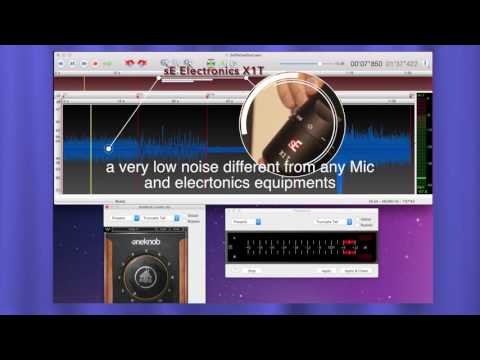
Microphone Self Noise example
Apri il video sul sito originale

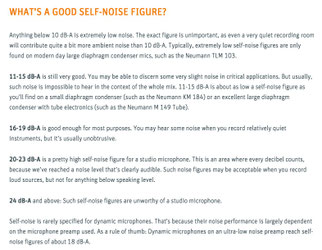
Se poi vuoi approfondire, c'è un bell'articolo che ho scoperto sul sito di Neumann che spiega molto bene quanto ti ho anticipato qui.Clicca sulla foto per il link.
Per certe produzioni è un valore importante, in particolare se si registrano tanti microfoni in una ripresa multi traccia come un coro ripreso con 4 o più microfoni: quel rumore si somma sul mix. Anche chi gira video a volte deve aggiungere a una ripresa la traccia di una intervista o di dover amplificare con un compressore un file di una voce ripresa dal boom della telecamera: compressore e boom, il fruscio si sente di più. Esistono trucchi per abbassare il self noise, ma non sempre è il caso o non sempre è possibile eliminarlo senza conseguenze sul risultato finale.

Ecco perché è importante conoscere questo valore.

Gli altri articoli del blog

Paolo Balestri·Chi scrive →
YouTube

Conversazione su YouTube

Commenti pubblicati originariamente sul video YouTube collegato a questo articolo.

@HowardEllisonUKVoice
How very unusual and interesting, Paolo. So the admired U87 not only sounds great (as we all know) but produces a 'better class of noise'! The Rode NTK is certainly quiet in your example, but what an irregular hiss by comparison - and, as with my NT1A, there are actual tones audible in mid range when you turn the gain really high. Don't know what to think about the SE and Sontronics! I am assuming you set each mic to the same acoustic level before recording? And how did you achieve such a low room noise?
@PaoloBalestri Autore
Hi Howard! Thank you! Yes, the U87AI sounds very fine everytime and on any equipment. Any Neumann to be honest. This is a rude test, I attach all mics in the same time inside to the mic room and one by one record a piece of nothing. Yes, the NTK may have the Tube, as the X1T. The Sontronics is a common mic, very noisy. Good sound but noisy. As you can see ther was a truk passahe in the street and in last track you can see the rumble. Anyhow, all mics same volume value before to record. Still remain a non scientific test. Anyhow, you can try how sound the X1t With a new Tube inside: http://www.paolobalestri.com/2016/06/29/se-electronics-x1t-tube-mod/ Cheers
@HowardEllisonUKVoice
Your new tube demo (wish I understood Italian!) shows a subtle difference - Sovtek sounding a bit 'brighter' I think. Mullard was THE tube of my boyhood, and I still have a few ECC83 sleeping in a box, plus 12AX7 and 12 AU7 glowing in my headphones amp, warming up the British summer. Pentodes such as the EF86 never sounded sweet and the noise level varied from sample to sample. Would not want one of the originals inside a microphone!
@PaoloBalestri Autore
Hi Howard, Yes, I agree with you. In my humble opinion the Sovtek got a great balance from noise and warm. Anyhow, the Mullard is very old piece of hardware, I found it used, so may be sounds better than the Sovtek, still pretty new, just a week of job. Also, this cheap tube mic, comes noisy from new, so is very hard to find a silent tube. I hope to find a Mullard ECC83A, but is not easy to find one at low price, because people know how it sounds. I hope to find one, but do not want to spend more than the mic! ;)
@HowardEllisonUKVoice
You set me wondering if Mullard actually made an 'A' version? They did with very ancient tubes such as the pentode EF37-A That was extra quiet, special low-hum heater construction, for mic and optical head use. Looks to me as though ECC83-A is a reincarnation by some modern maker.
@PaoloBalestri Autore
I'm not a tube expert, just few months I tested some tubes for a couple of mics. It is hard to find same results in mics instead the amplifiers. You can take a look also to the Rode NTK I modify recently. I have not yet pubblished any video but I will: change also the capsule, but try lot of different tubes and some in amplifiers sound fine, in mics lost any pleasure sound. It is a 6922 series, ECC88. I try also a Mullard Military Grade but sounds not so fine as the old Mullard ECC88 GAE 41C2 or the Sovtek 6922 wich wash the orginal one used in the old Avalon VT. Someone love the Telefunken series, I'm not so happy here! This below is the page, and in some weeks I should add also the video test and the how to unmount capsule: http://www.paolobalestri.com/2016/06/01/rode-ntk-modding-tube-e-capsula/
@jxxnxn1565
Excellent, now I am sure that I wan't to buy a Rode mic.
@PaoloBalestri Autore
Juan Nuño take care about noise floor. Under 20 db is something usable. From 20 db became a noise you will have in any breath, ending words and so on. U87 15/12 db, sE electronics X1 16db, AKG p420 15db, Sennheiser MK4 10db, Rode NT1a 5/6db. Look for self noise or Equivalent Noise Level.
@jxxnxn1565
Hello Paolo, I really appreciate a lot your reply. I am Technical Translator that currently is on training for voice-over. I just have bought a Rode NT1 and check that noise floor is excellent. Your reply answer my question about how loud should be the noise floor on a mic, I was suspecting that the top limit is 18-20 dB. Thanks for the mics that you mention, I will research about them and put on my list of mics for my next shoppings. Thanks for your videos, I relly like to see them and learn how you make your job.
@PaoloBalestri Autore
Yes, better below 18. Neumann say 20 is the top, I say better, better below 16 if possible. The NT1-A got 5 db, is one of much more silent as the new NT1 and the CAD E100S.
@silencenhikes6692
So forsomeone who does not care about recording voices but just ambient noise like nature, distant birds, rain without that hissing sound how do you go about it? Expensive mic?
@PaoloBalestri Autore
You may need very low noise mics for that. Anyway lower than 12dB of self noise and with a large frequency gamma.
@silencenhikes6692
Paolo Balestri thanks I saw the rode nt1 has only 4db of floor noise. But it needs phantom power and out in the woods far out hiking its not an option. My mic has 17db.
@PaoloBalestri Autore
Take a look https://www.zoom-na.com/products/field-video-recording/field-recording
Vuoi commentare o proseguire il confronto? Scrivi un commento su questo appunto nel canale nativo di Lato Cardioide.